The relief years.
Mission Sowers started with a simple impulse: get on a plane, go to Kinshasa, and help. We arrived with suitcases full of supplies — sunscreen for children with albinism, who otherwise develop severe burns without it. Mattresses. A washing machine. Renovation materials. School fees to keep children in education for one more term.
Over three years, we reached up to eight orphanages and over eight hundred children. Every year, we raised what we could — between $2,000 and $7,000 per trip — and we distributed it across the homes we visited. The people running those homes were glad to see us. The children were glad to see us.
And every year, as we packed to fly home, the homes returned to where they'd been. The mattresses wore out. The washing machine broke. The school fees ran out at the end of the term. The sunscreen lasted a few months. We came back the following year and found the same needs waiting.
Nothing was wrong with the impulse. The approach was the problem. We were filling a bucket that had a hole in it. Filling it generously, filling it with love — but filling it, nonetheless, with no plan for what happened next.
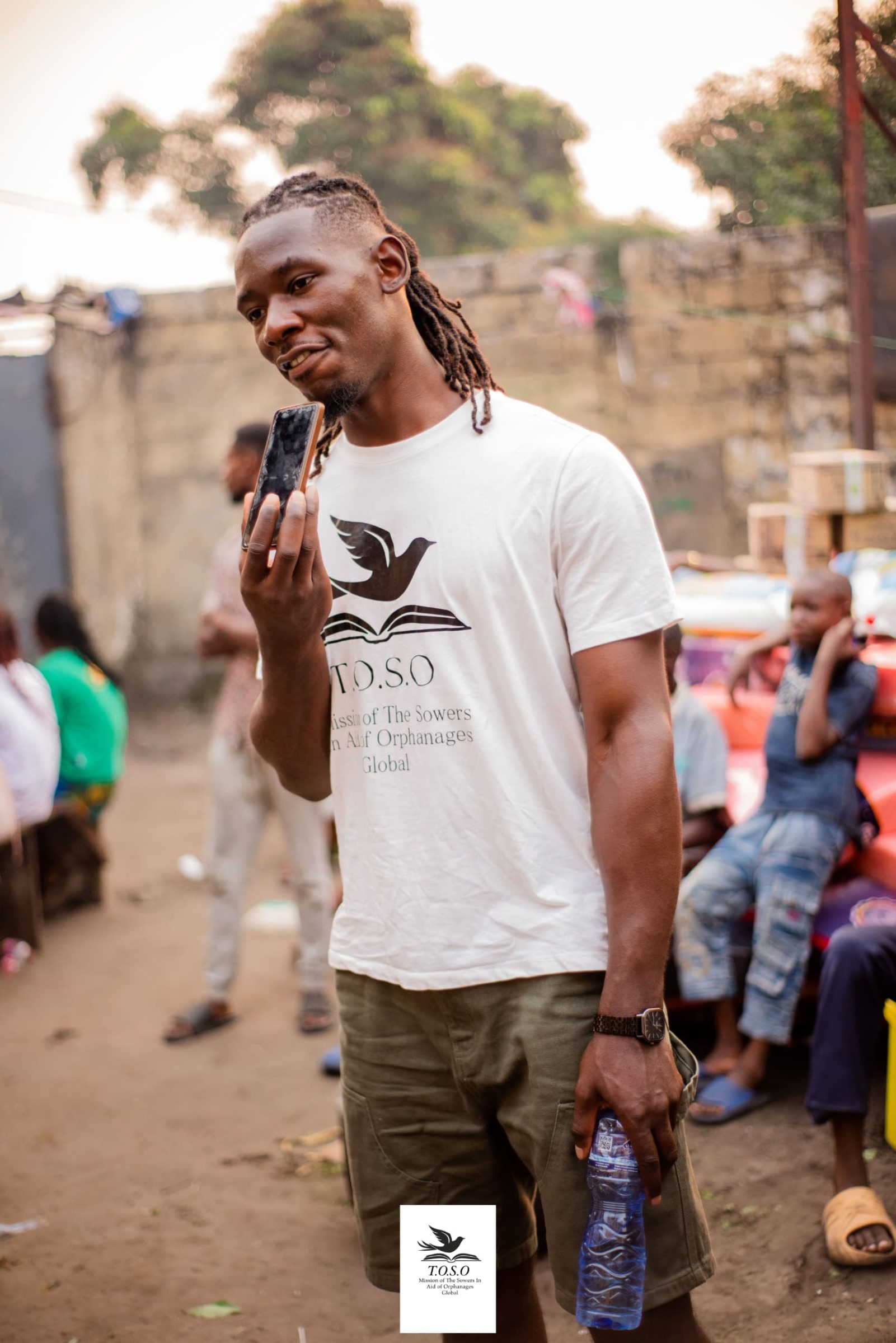
Kinshasa, 2025. Our team member with a child at Orphelinat Ceprokin.
Same heart. Different answer.
We spent three years doing relief. Then we spent six months designing something better.
Relief, year by year.
$2,000 to $7,000 per trip. Food, clothes, mattresses, washing machines, TVs, light renovation work. Distributed across multiple homes each visit.
The children received what they needed for that month. Then the supplies ran out, and the homes returned to exactly where they had been. We learned that emergency giving, repeated annually, is not the same as change.
The Rooted Model.
$13,000 per home. Solar power. Clean water. A small business the home runs. Skills training for 5–10 older residents every year.
Infrastructure that produces income and outcomes for years, not months. Homes stop running on emergency and start running themselves. Same heart. A better answer.
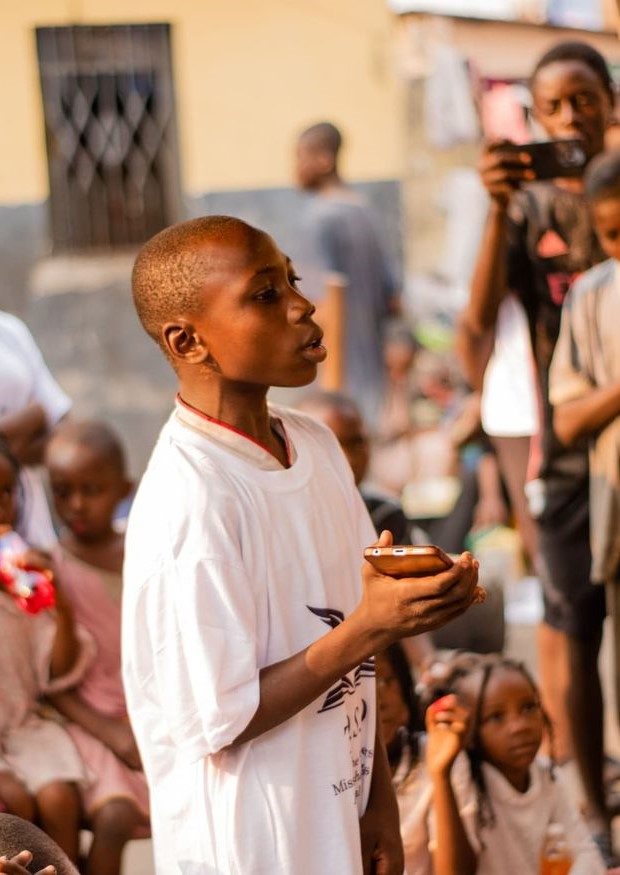
Meet Freddie.
Freddie is 16 years old. Five years ago, when he was eleven, he was sleeping on the streets of Kinshasa. Someone told him there was an orphanage nearby — a woman named Sister Rosalie who took children in. He found his way to her gate and knocked.
She said yes.
Freddie has been at Orphelinat Ceprokin ever since. Sister Rosalie has seen to his schooling, as she has for dozens of children who have come through the home. Some of those children are at university now. Some are working. Some came back to help.
In 2025, when our team visited Ceprokin and spent time with the children there, Freddie said something to us through a translator. He said it in Lingala, quietly, and we carried it home.
"God bless Mission of Sowers for what you do. Just spending time with us means so much. We keep you in our prayers."
— Freddie, in Lingala. Kinshasa, 2025.
Not the solar. Not the water. The time. But the solar is what makes school possible in the evenings. The water is what the home runs on. The business is what lets Sister Rosalie pay her helpers. And the apprenticeship programme is what gives Freddie — and the young people around him — something real to build toward.
That's the whole idea.
"Behind every face here is a caregiver who chose them.
Our role is to support the people already doing the work."
— Mission Sowers Founding Principle
The milestones.
First trip to Kinshasa
Mission Sowers makes its first visit to Kinshasa, DRC. We visit several orphanages, distribute supplies — including critical sunscreen for children with albinism — and begin to understand the scale of need.
Expanding reach — 8 homes, 800+ children
Annual trips continue. At our peak, we visit up to eight orphanages and reach over eight hundred children. Supplies include mattresses, washing machines, school fees, and light renovation. We build relationships. We also begin to notice the limits of what we're doing.
The question that changed everything
A team member asks: "What happens to this home on January 1st, the year after we stop coming?" The honest answer is: nothing changes. That question starts a six-month process of redesigning how Mission Sowers operates.
The Rooted Model is designed
Mission Sowers finalises the three-layer programme: core infrastructure (solar, water, business), an annual apprenticeship cohort, and site-specific capital. We identify Orphelinat Ceprokin as the first pilot home. We meet Freddie.
Pilot installation — Ceprokin
Our team is on the ground in Kinshasa for the full month of July. Sekani Tech installs the solar system. Hope Drill sinks the borehole. The first apprenticeship cohort of 5–10 young people is enrolled. Baseline metrics are captured.
Inaugural Gala — Dublin
Mission Sowers hosts its first annual gala in Dublin, Ireland. We present the results of the pilot, launch the next funding cycle, and open the conversation about the second home. A small room. A big conversation.
Who we are.
Mission Sowers operates from Dublin, Ireland, and Kinshasa, DRC. We are not a large organisation. We are a small team with a clear model and deep relationships with the people on the ground. We believe that matters more than scale — at least for now.
Our Irish charitable operations are governed under Church of God Charitable Trust (CGCT), an umbrella charity registered in Ireland. All donations to Mission Sowers flow through CGCT, which provides the governance structure, financial accountability, and statutory reporting framework that our donors and partners expect.
Our DRC work is coordinated through our registered NGO status in Kinshasa, and delivered in partnership with local technical providers — Sekani Tech (solar) and Hope Drill (water) — and the community-based organisations we work alongside.
The gala in November 2026 will be where we present the results of the first pilot and open the next chapter. If you'd like to be in the room, or you'd like to talk to us about what any of this means for you, we'd welcome that conversation.